Recognising Palestine feeds jihadist ideology

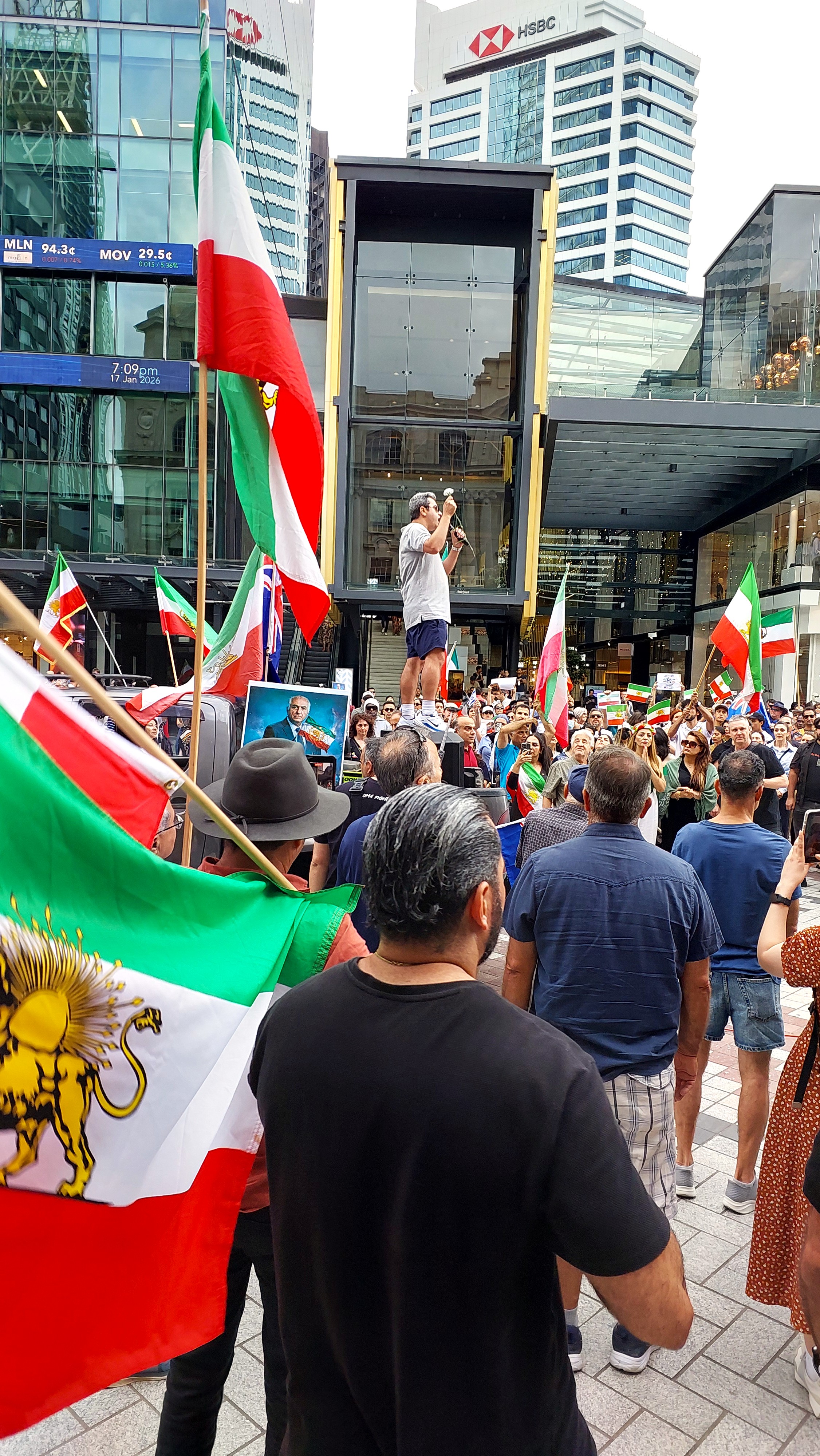
The New Zealand Government must not recognise the so-called state of “Palestine” at the UN this week.

Doing so at this point would be a reward for barbaric Hamas terrorism and their complete intransigence in refusing to release the hostages they continue to hold in utterly appalling conditions. There is no doubt that the destruction that is happening in Gaza is a tragedy. However it is a tragedy caused by the intransigence of Hamas. And every time more international pressure is applied to Israel, the less likely Hamas are to negotiate or surrender.

The unconditional recognition of Palestine this week by the UK, Canada and Australia, without even requiring Hamas to first to release the hostages is incomprehensible. It doesn’t just represent a total loss of moral clarity. It displays a complete naivety about dealing with terrorist jihadists. It is not a “practical plan” towards peace as the UK Prime Minister described it. It is a free political gift to the vicious barbarians in Hamas, that requires absolutely nothing from them in return.

New Zealand must not participate in this futile virtue-signalling. Instead we should be standing strongly in support of Israel as the only truly democratic and free nation in the Middle East.

Only when the malevolent influence of Hamas and other jihadist forces is broken and detached from the hopes of the Arab people who live in Gaza and the West Bank will there be space for genuine dialogue and negotiation. The sort of dialogue and negotiation that Israel has been willing to engage in for decades – but which has always been thwarted by the jihadists. The ones who promote the genocidal slogan – from the River to the Sea…

It is time to destroy this ideology – not to feed it.

Ewen McQueen
September 2025

Posted in International Relations | Tagged , , , , , | 3 Comments

Treaty Principles Bill Submission

The Treaty Principles Bill is expected to fall at its second reading in Parliament today. I confess to having struggled with how to respond to the Bill. There were aspects of it which I very much appreciated. In particular that it invited open public debate on how to interpret the Treaty – something which until now had been a closed narrative, tightly controlled by the liberal establishment in our country. Now ordinary New Zealanders were going to get their opportunity to have a say.

I also appreciated the fact that the Bill was an attempt to reconnect modern understanding of the Treaty with its historic roots. The dual-sovereignty paradigm of Treaty interpretation of recent decades has strayed far from those roots. It is a paradigm based primarily on assertions, loudly repeated in the echo chamber of modern “scholarship”, and bears little relation to what the actual historical evidence clearly shows. The Bill attempted to rectify that.

However, whilst the proposed principles of the Bill were a fair reflection of how all parties understood “Kāwanatanga katoa” in 1840 (i.e. Crown sovereignty over all New Zealanders), the Bill was less successful in capturing the historical essence of Article Two of the Treaty. “Tino rangatiratanga” dealt with chiefly authority (within the context of overarching Crown sovereignty). This was a collective right, but the Bill’s attempt to couch it in language framed in terms of individual rights missed the mark. As such I had to conclude it needed significant amendment on this front before I could support it.

You can read my full submission here Treaty Principles Bill – Submission Ewen McQueen

Ewen McQueen
April 2025

Posted in NZ History, Treaty of Waitangi | Tagged , , | 2 Comments

The day the Garbage spoke

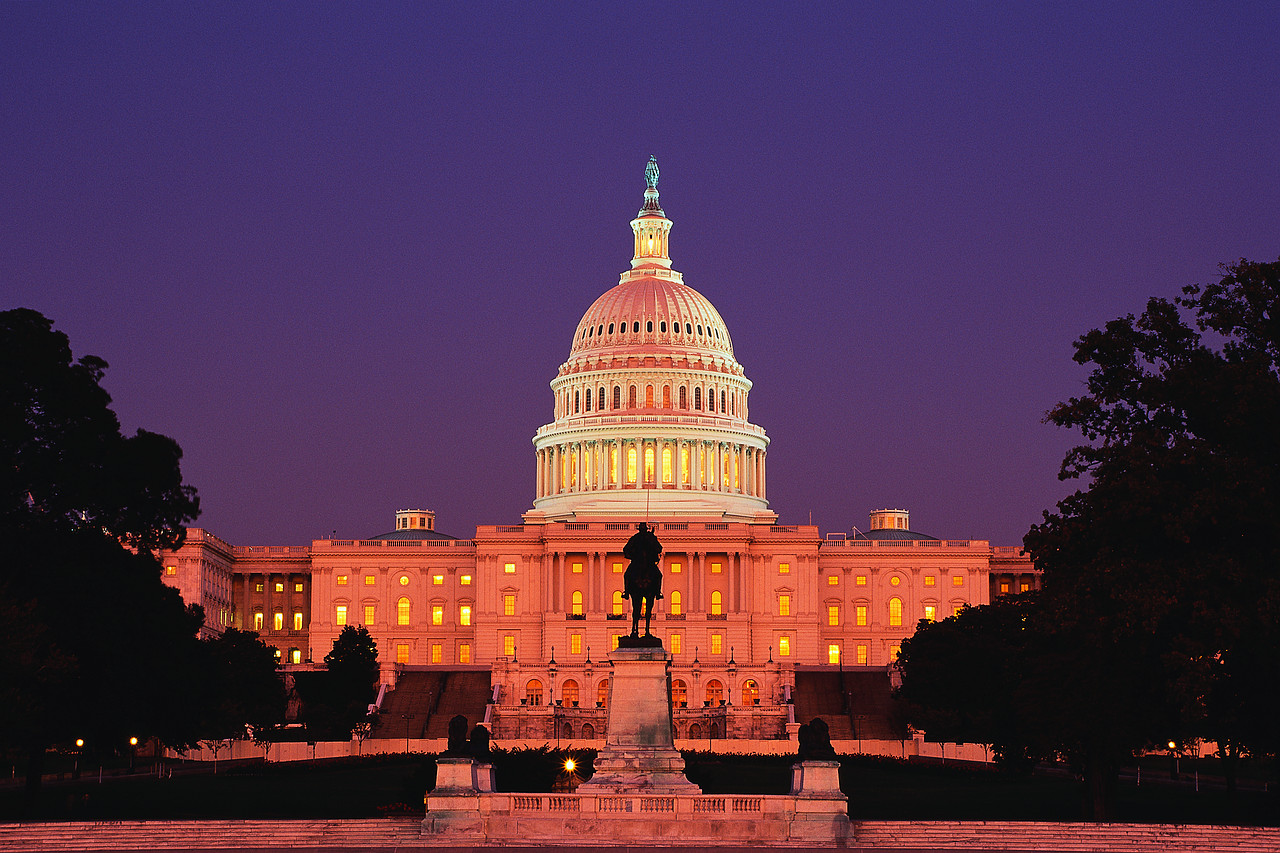
Washington DC

One result in the US election last week spoke volumes. The final count in the State of Washington DC was Harris 93% – Trump 7%. It was a result which highlighted the yawning chasm between the beliefs and values of the elite governing class – and the majority of American citizens. In the nation’s capital, the ruling class of bureaucratic, political, business and media elites remained firmly ensconced in their own self-virtuous world of woke. But outside in the rest of America, the Garbage spoke.

In the heartland rural and industrial working class States, they spoke. They refused to be gas-lit and cowed into thinking they were bad people for still believing in the American dream. They refused to accept that allowing millions of people to flood into their country illegally was a good idea. They didn’t buy into economic and climate policies making them worse off and their nation more dependent on foreigners. They didn’t celebrate with their President as he danced on the Whitehouse lawn with men wearing dresses.

And most of all, they didn’t believe the years-long barrage of media indoctrination that Donald Trump was somehow the reincarnation of Hitler. They claimed the right to make their own judgement – and on November 4th they did. Trump returned with millions more votes than both prior elections, and won more States than his first victory in 2016.

There is a lesson here for all the liberal elites who in recent decades have manoeuvred themselves into the cultural and political high places of many western countries. Democracy doesn’t belong to them. The question is – will they listen?

In our own nation it seems they are not. Last year New Zealanders threw out the most liberal government in our history, and placed in our Parliament a centre-right coalition which included some robust conservatives in the NZ First and Act parties. And yet the liberal elites have continued on their woke ways.

In the bureaucracy there is the Solicitor General who tried to revise Crown prosecution guidelines so they were no longer colour blind. And the Law Commission which continues to push for the legal enforcement of gender ideology. There are the Police who started registering hate crime incidents against individuals, when there are no such laws on our statute books. And the teachers in New Plymouth who banned a young man’s well considered contribution from the school speech contest, because it might offend some students. In the corporate world there are the HR departments pushing pronouns into everyone’s email signatures, and requiring staff to complete compulsory e-learning modules on the full range of diversity topics.

And of course there are the New Zealand media elites, continuing in their attempts to gaslight us on multiple fronts. Apparently we need to understand that “men” can have babies – and it is a wonderful thing. And we also need to understand that views about sovereignty and the Treaty which were accepted by nearly all New Zealanders for 150 years are now misinformation, racist and divisive. Indeed our national broadcaster TVNZ has on repeat the constant refrain that the new government is “attacking” the Treaty and Māori. Never mind that since coming to office it has continued to spend millions on Māori broadcasting, language, and cultural courses, as well as progressing three more Treaty settlement deals through Parliament.

All this shows the liberal ruling elite in our land, much like the 93% in Washington DC, won’t be giving up in a hurry. However eventually they will not be able to out-manoeuvre the sheer people-power of our democracies. And there are already signs of hope. Our Parliament now has some robust anti-woke voices. Our media landscape is now seeing new platforms facilitating alternative views. And some of our young people are clearly determined to think for themselves, and not be silenced. The swamp is beginning to drain…

Ewen McQueen
November 2024

Posted in Cultural Renewal, International Relations | Tagged , , | 4 Comments

Giving legal force to gender ideology

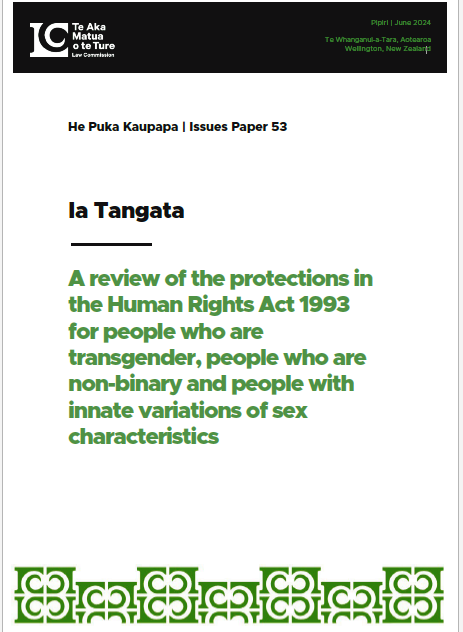
The Law Commission wants the Human Rights Act 1993 amended to make it unlawful to discriminate on the grounds of gender identity and expression. Earlier this year their team of highly paid taxpayer funded lawyers and bureaucrats produced a 200 page “Issues Paper” on the matter. Their employment on this exercise was apparently money well spent. The new Minister of Justice, Paul Goldsmith, certainly gave no instruction to the Commission to cease work on the matter.

The Issues Paper identified 80 different questions that ostensibly needed to be addressed. Public submissions were then invited on these questions. Of course this was a classic case of where the questions, determine the answers. As I noted in my response to the Commission,

…the entire paper is written in such a way that the ideology of gender fluidity is presented as an established paradigm and the only questions needing to be asked are how to work out the details of its legal enforcement. This effectively shuts out any contrary views from those who find it difficult to identify a point of engagement with your paper at a more foundational level.

However if you made it to the end of the prescribed questionnaire, the final question did open a slight door for wider comment. It asked – are there any other issues relevant to this review or options for reform that we have not identified or anything else you would like to tell us? I offered the following observation,

This review ignores the foundational question of what is true about sex and gender. As noted earlier it pre-supposes that the ideology of gender fluidity is true and something that should be normalised in New Zealand law. As such it risks giving legal force to a falsehood.

A very large number of New Zealanders do not agree with this approach. And they are increasingly concerned that the propagation of this ideology is seriously undermining their fundamental rights to freedom of expression, conscience, religion and political opinion. This review has given very little consideration to such concerns. The only time these rights are mentioned is primarily in the context of how it is justifiable to limit them, rather than how to uphold them.

More importantly many New Zealand parents are increasingly concerned about the impact that the promotion of the ideology of gender fluidity is having on their children, and indeed all the children of New Zealand. At best it is causing confusion, and at worst it is causing serious harm to our children. The Law Commission should seriously reflect on its role in normalising this ideology by undertaking this review. The suggestion that this ideology should be given significantly increased influence in our culture by gifting it the legal powers discussed in this issues paper is profoundly misguided.

The final point in my comment above is the key problem here. Any change to the Human Rights Act will give gender ideology legal force in our culture. This empowerment will make it far more difficult to resist its promotion and propagation across multiple domains including academia, business, sports and education. For instance it is currently NZ First policy to remove the teaching of gender ideology from schools, and to ensure publicly funded sports bodies do not allow gender rules to compromise fair competition. However if the Commission’s proposals for the HRA are implemented, any such policies are likely to be deemed discriminatory and challenged as unlawful.

One wouldn’t be so concerned if this was just the isolated thinking of a bunch of elitist and woke bureaucrats, unlikely to see the light of day. However given Prime Minister Luxon’s public record of support for the “diversity” agenda, there is a real chance that the Commission’s proposals will indeed be implemented. The silence of his Justice Minister on this matter certainly doesn’t bode well…

Ewen McQueen
November 2024

Read my full submission on the Law Commission Issues Paper here

Posted in Cultural Renewal, Protecting Children | Tagged , , , , , | Leave a comment

Kāwanatanga katoa was the fundamental question at Waitangi

A recent NZ Herald opinion piece continued the modernist narrative that in 1840 the chiefs did not agree to Crown sovereignty. Here is the alternative view I sent them, which they declined to publish…

Matthew Hooton wrote in the NZ Herald last week that “There’s no doubt that both Māori and Pākehā in 1840 understood tino rangatiratanga to be a bigger deal than kāwanatanga”.1 However whilst this is undoubtedly the modernist position on how we should interpret the Treaty, the historical evidence suggests something very different.

Article One of the Treaty states that the chiefs agreed to “give absolutely to the Queen of England forever, the complete Government (Kāwanatanga katoa) over their land”. This is the late Prof Sir Hugh Kawharu’s back-translation of the Māori text into English.2 Whilst many today prefer to ignore the strong and clear meaning of this Article, the chiefs in 1840 were under no such illusion. They quickly grasped the essence of what it meant. The British Crown would become the pre-eminent governing authority in these islands. Yes, their chieftainship over their lands and villages would be protected. But only within the context of the over-arching sovereignty of the Crown over all New Zealanders – including them.

How do we know this? Because they told us. We have historical accounts of the debate at Waitangi that record what various chiefs said. In particular William Colenso’s account is generally accepted as an accurate description of proceedings.3 It shows that the idea of coming under Crown authority was indeed a very big deal for the chiefs. In fact Kāwanatanga katoa was the prime focus of discussion and debate. And that little word katoa is an important clue as to why. It is rarely mentioned. But it means complete, all-encompassing, totally, without exception.4 It’s no wonder it focussed the minds of the chiefs on the issue of Crown authority.

Colenso’s notes showed many chiefs were initially reluctant to sign the Treaty, precisely because they understood it would establish an authority above theirs.  Tareha replied to Hobson “We only are the chiefs, rulers. We will not be ruled over. What! thou, a foreigner, up, and I down! No”.5  Another chief, Te Kemara, opposed the Treaty because it would mean “the Governor to be up and Te Kemara down”.6 Other chiefs expressed similar sentiments both at Waitangi and other locations around the country where the Treaty was signed. In the Hawkes Bay one chief, Te Hapuku, even drew a diagram showing the Queen above the chiefs.7

These chiefs clearly did not see the Article Two guarantee of tino rangatiratanga as allowing them to retain unqualified chieftainship or “absolute sovereignty”, as Hooton and the modernists suggest. And taunts from local Pākehā settlers that the Treaty would make them slaves certainly wouldn’t have encouraged that idea.

In the face of such taunts the chiefs sought counsel from trusted Pākehā advisors. The French Catholic missionary Pompallier was, unsurprisingly, not an enthusiastic advocate for the Treaty. However he advised the chiefs that the decision was up to them, and the key question was “whether it is preferable for you to recognize and obey a great European chief, rather than to live as you have lived until now”.8 Henry Williams, the Anglican missionary who translated the Treaty, met with many on the evening before the signing. He later wrote that he explained again the Treaty, clause by clause, and how it meant “they would become one people with the English…  under one Sovereign, and one Law, human and divine”.9

Nowhere in the historical records do we find any indication that either the chiefs or the Pākehā protagonists understood anything other than that Kāwanatanga katoa meant the Crown was being established as the pre-eminent governing authority in the land. This was the key question under debate. This was what the chiefs had to agree to – or not. The significance or meaning of the Article Two guarantee of tino rangatiratanga hardly even featured in the proceedings. Of course it was important. But it wasn’t the main question at stake.

As it transpired, after initial reluctance and doubt, most chiefs agreed to the Treaty. They did so not because of assurances of “equal partnership”, but because they were persuaded of the benefits that Crown authority would bring. These included law and order, peace between tribes, and increased opportunity for trade. Tāmati Wāka Nene for instance acknowledged Hobson would become “our Governor” and urged him to remain as “a father, a judge, a peacemaker”.10  Many others likewise invited Hobson to stay as Governor for both Māori and Pākehā. One was Tāmati Pukututu who accepted Hobson as “a Governor for me, for us, for all.” 11

These statements clearly don’t fit with the modernist narrative that the chiefs only agreed to the Governor having authority over Pākehā. However they are the historical facts. Hooton and the modernists need to engage with them, rather than ignore them. They also need to stop offering shallow interpretations of Te Kawenata Hou (the Māori New Testament).

It is true that this document would have had significant influence on how the chiefs understood the Treaty. In the 1830s Christianity had been widely accepted among Māori. Tens of thousands of copies of Te Kawenata Hou had been printed, and were eagerly sought. Hooton would have us believe it contributed to the chiefs understanding of rangatiratanga as “absolute sovereignty”.

However in Te Kawenata Hou the term rangatira is a general term for leadership. In contrast kawana is a very specific term used to denote governors who represent the authority of kings. To use Hooton’s example of Pilate – as the kawana (governor) he represented the sovereignty of the Roman empire in Jerusalem. He had the authority to tax and to execute judgement. The local Jewish leaders who wanted Jesus crucified had to get his permission. Those leaders are described in Te Kawenata Hou as rangatira. From this the chiefs at Waitangi would have quickly understood what was being proposed in the Treaty. And it certainly did not involve them retaining “absolute sovereignty”.

As we debate the future of the Treaty in our constitution we need truth-telling about our history. The assertion that in 1840 the chiefs did not agree to Crown sovereignty being established over all New Zealanders does not reflect the historical evidence. It is certainly true that the Treaty affirmed chieftainship. But any discussion about how to implement that today needs to align with the original Treaty vision. That involved chieftainship under Crown sovereignty – not in place of it.

References

1) Matthew Hooton, “Act achieves total victory on Treaty Principles bill”, NZ Herald 13.09.24

2) waitangi-tribunal.govt.nz – Prof Sir Hugh Kawharu Maori translation of Treaty

3) William Colenso “The Authentic and Genuine History of the Signing of the Treaty of Waitangi”, published in 1890 based on notes Colenso took at the time

4) Te Aka Maori-English Dictionary – maoridictionary.co.nz

5) Ibid Colenso page 24

6) Ibid Colenso page 17

7) Claudia Orange “The Treaty of Waitangi” 1987, page 81 – Te Hapuku’s diagram

8) Waitangi Tribunal “He Whakaputanga me te Tiriti: The Declaration and the Treaty” Wai 1040, 2014, page 368

9) Caroline Fitzgerald (ed) “Te Wiremu – Henry Williams: Early Years in the North”, Huia Publishers, Wellington, 2011, page 317

10) Ibid Colenso page 27

11) Ibid Colenso page 21

Posted in NZ History, Treaty of Waitangi | Tagged , , , , , , , , | 3 Comments

Luxon channels Chamberlain on Israel

The conflicting parties in the Middle East need to get “around the table and actually negotiate”. So said New Zealand Prime Minister Christopher Luxon last week. It is a statement Luxon has now made several times, and one Neville Chamberlain would have heartily approved of.

When he made his comment last week Luxon was on a visit to Laos. He may as well have been in La-la land. Who does he think the Israelis are dealing with? A potential coalition partner? A difficult union delegation? These are the people you get around the table with. Hamas, Hezbollah and the Iranian regime, are not these people. They are genocidal jihadists who have openly declared their determination to wipe Israel off the map. And their barbaric murderous actions are ample proof that they mean exactly what they say.

You don’t get around the table with people who want to kill you. You fight them. You don’t negotiate with them. You confront them, and you defeat them. As Israeli Prime Minister Netanyahu said last week, Israel doesn’t just have the right to defend itself – it has the right to win. Indeed it must win. Kicking the can down the road through a ceasefire for the sake of short term peace is not an option. Its enemies will simply regroup – and return for more massacres.

Israel knows that. Which is why it is fighting – and winning. And in so doing it is changing the strategic realities on the ground in a way that is far more likely to facilitate peace in the long term. Only when the malevolent influence of these jihadist forces is broken and detached from the hopes of the Arab people who live in Gaza and the West Bank will there be space for genuine dialogue and negotiation. The sort of dialogue and negotiation that Israel has been willing to engage in for decades – but which has always been thwarted by the jihadists.

Former Israeli Labour Prime Minister Ehud Barak writes in his biography of how attempts to progress the Oslo Accords, in 1995 and again in 2000, were never met with good faith negotiation from Yasser Arafat. And as for the jihadists in Hamas, they met both attempts with increased rocket attacks and suicide bombing to deliberately sabotage any chance of peace. Like Chamberlain, Barak discovered that getting around the table with people beholden to such malevolent influences is a futile endeavour.

In light of this our own political leaders need to completely change their approach. Pointless platitudes about ceasefire and de-escalation need to stop. Instead they should be standing clearly with the only real democracy in the Middle East and their right to fight – and to win.

Ewen McQueen
October 2024

Posted in International Relations | Tagged , , , , , , | 1 Comment

The chieftainship rests with one – the Governor

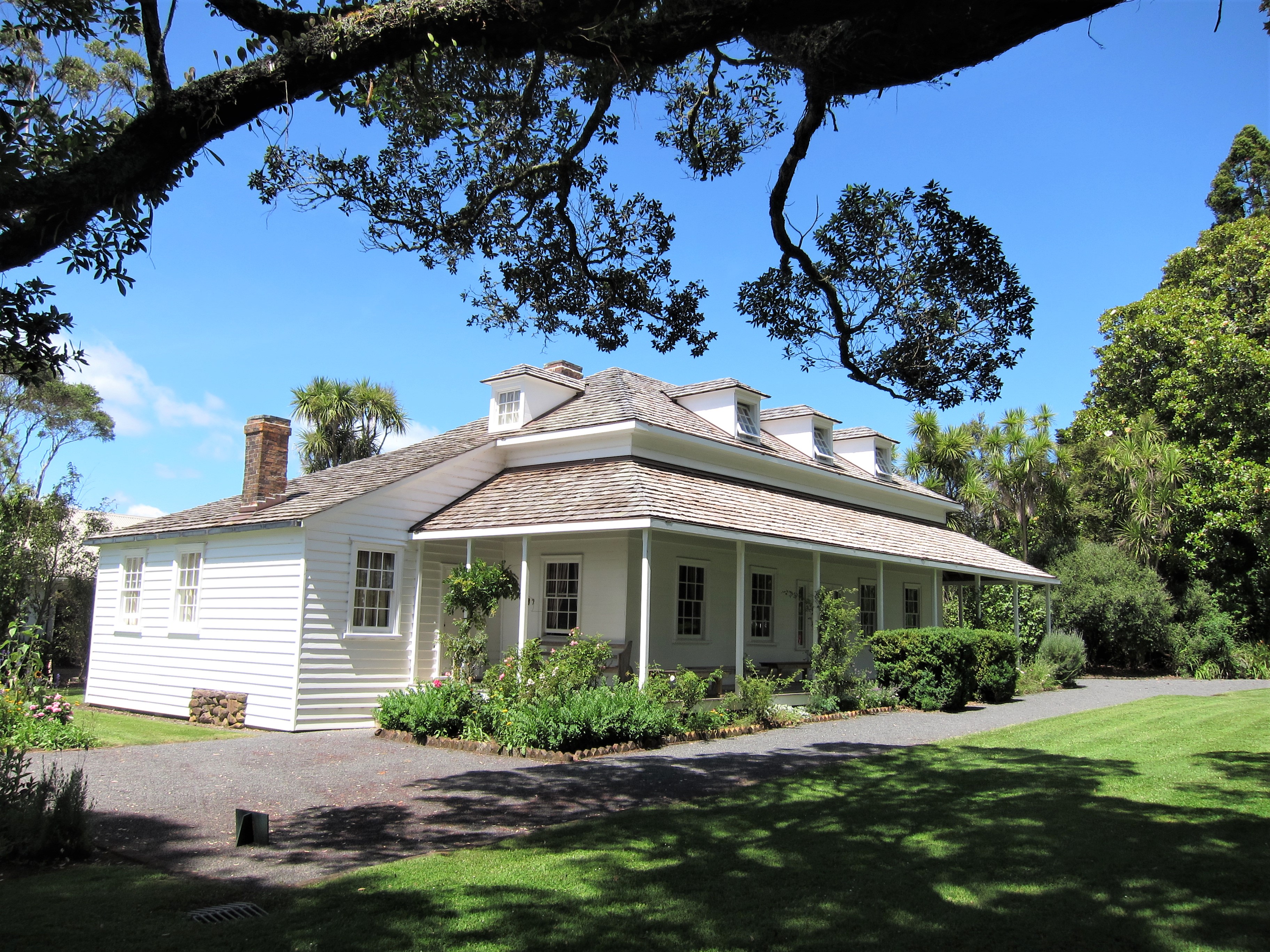
After Hone Heke felled the flagstaff in 1844, a group of Chiefs meet with Governor Fitzroy at Waimate North to discuss the situation. The transcript of the meeting gives a fascinating insight into how they understood the Treaty. Watch the video linked under the photos below.

This is just one of the many stories told in One Sun in the Sky. Thousands have read it – and loved it! Get your copy at http://www.onesuninthesky.com

Posted in NZ History, Treaty of Waitangi | Tagged , , , , , | Leave a comment

NZ helps to prolong the Gaza catastrophe

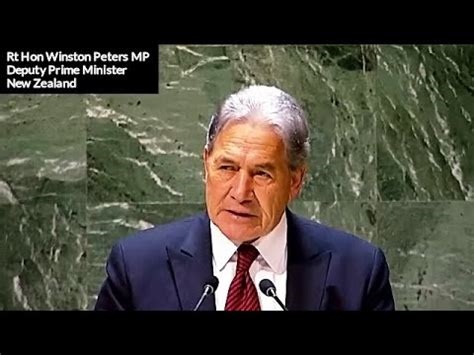
Our Deputy PM Winston Peters spoke at the UN this week, declaring the situation in Gaza an “utter catastrophe”. He’s right. But in joining the pile-on of international pressure on Israel to agree to a ceasefire he is simply helping to prolong the agony.

Whilst the world continues to spend most of its time berating Israel, Hamas has no incentive to come to the negotiating table. Why would it? It can sit back and wait until Israel is forced into a unilateral ceasefire. Why make concessions or take any reasonable negotiating position if the other party is being forced to your terms by the international community?

Hamas cares little about the suffering of the civilians it uses as human shields. If they did, a ceasefire would have happened long ago. Indeed the war would never have happened. All they care about now is their own survival. And if they can get a ceasefire with hostages still “in the bank”, they have a ticket to that survival.

The constant demands for Israel to not enter Rafah, to reduce civilian deaths, to provide humanitarian aid, to implement a ceasefire – all of it plays directly into the hands of Hamas. And in so doing, it prolongs the catastrophe. It also facilitates the continuation of a genocidal terrorist organisation.

Even more ridiculous are calls from outsiders for new elections in Israel. An election campaign right now in Israel would guarantee one thing only – no ceasefire and no release of hostages. With the Israelis distracted by a bitter and divisive campaign, why would Hamas do anything other than wait for the possibility of a more pliable leadership in Jerusalem? It would be the surest way to prolong the fighting.

Yes Gaza is a catastrophe. But ending it requires a complete reversal of current diplomatic settings. Instead of constant criticism of Israel, the international community needs to bring relentless pressure to bear on Hamas and its supporters Iran and Qatar. There should be unceasing demands for the immediate release of all hostages, and the unconditional surrender of all Hamas fighters. Surrender or face the consequences of your actions. That should be the single unified message from every country that upholds the value of human life. The unspeakable barbarity of the October 7th massacre demands no less.

And instead of pointless ongoing demands for a ceasefire the UN should be taking practical action to make such a ceasefire more likely. Implement robust sanctions against Iran and Qatar for harbouring the Hamas leadership and funding their brutality. Freeze the foreign assets of Qatari elites who share caviar with terrorists in Doha. And shut down UNRWA, the agency which has provided cover for Hamas and helped propagate its homicidal ideology among Palestinian children.

Only when Hamas understands that they have nothing to gain from prolonging the Gaza catastrophe will it end. And until New Zealand and so many other nations realise that, we will continue to be part of the problem.

Ewen McQueen
April 2024

Posted in International Relations | Tagged , , , | 4 Comments

Marriage – the elephant in our economy

The institution of marriage builds wealth and economic prosperity. So reported the NZ Herald recently, based on new research. Shortly after, the National Party released its 100-point economic plan. No mention of the “M” word. Hardly surprising – none of the 17 political parties on offer this election addresses this elephant in the room.

And it is an elephant. Economist Professor Melissa Kearney from the University of Maryland makes clear in her research that marriage is a key to building family wealth. And she points out there is not just a correlation between wealth and marriage, there is evidence it is causative – i.e. marriage is one of the key reasons families succeed financially. Kearney notes that “marriage is the institution that most reliably delivers long-term commitment between parents to live together and pool their resources to take care of children.”

That statement is not exactly rocket science. However it’s not popular either. Kearney notes that in spite of the evidence, “this issue has not gotten the attention it deserves as a policy matter or as an urgent matter on a society level, precisely because many folks have decided this is something that should be off limits.” It seems many of our leaders have decided the only thing we are allowed to consider about family wealth is how to tax it – not how to create it.

The problem with this head-in-the-sand approach is that a nation’s economic success is inherently linked to the financial success of its families. When families thrive, nations prosper. Conversely when families fail, governments grow. They grow due to the downstream impact of family breakdown on all the major public cost centres – welfare, justice, health and education.

These costs have been one of the main drivers of our increased tax and debt burden in recent decades. And that burden is a major drag on economic growth. It means we have to run faster just to stand still. Not only that, but a good portion of the economic “growth” which has occurred, does not reflect a genuine increase in prosperity. Increased public spending on police or prisons for instance, may contribute to higher GDP figures, but it hardly represents real social or economic progress.

Given all of this, our political leaders should be lining up to affirm marriage as a key to our long term national prosperity. They should be promoting policies that will rebuild a culture which respects and upholds the formal, lifelong, public commitment between a husband and wife. Because a 10-point plan to affirm marriage would address the roots of our economic malaise – and be far more effective than a 100-point plan focused on the foliage.

Ewen McQueen
October 2023

Posted in Economic Transformation, Honouring Marriage | Tagged , , , | 9 Comments

This is what lawlessness feels like

It’s 2.30am in Epsom. Someone has attempted to invade my elderly neighbour’s home. The offender is still in the vicinity. The police have been called but they aren’t coming – too busy. I’m standing in the street on my own. I’m thinking I have nothing in my hands to defend myself. How can I arm myself? This is what lawlessness feels like.

As our country grapples with increasing crime and social breakdown, there are probably many other similar stories. And like me, many people thinking – how can they protect their family and community. If the police aren’t coming, then we’re on our own. It’s up to us. This is a dangerous place for our country to be in. And we need to ask, how did we get here?

My own story began two hours earlier. I was woken after midnight by a loud crash. Going outside to investigate I found my elderly neighbours looking at a large hole smashed through their ranch-slider. A sizeable chunk of concrete lay inside on their floor. No car had driven off and I sensed the offender was still around. A call to the police proved fruitless. They were too busy. I was surprised, as it was only a Tuesday night. I suggested a dog would quickly find the culprit, but to no avail. Police would not attend. So my elderly neighbour resigned himself to sleeping in a chair by his broken door for the rest of the night. He was determined to guard his property and protect his wife. And in the dark with my cell-phone light, I checked around their house and reassured them no-one was there. I was wrong.

Two hours later I was abruptly woken again – this time by shouting. The offender had returned and tried to access the house via the ranch-slider. A hand reaching through the broken glass to unlatch the door had alerted my neighbour. Again I rushed out, but again the offender had disappeared. However there was no doubt he was somewhere nearby. Another more urgent call to the police still gave no assurance that they would attend. And so I waited in the street. And at that point, in the dark, I realised I was on my own. The sense of vulnerability was palpable. I had nothing in my hand to defend myself or my neighbour. And the police weren’t coming. The question about how to arm myself was inevitable.

So how did we get here? We absolutely need to get tougher on crime. But to focus solely on ever more police and stronger sentencing is to miss the point. Crime is a lagging indicator of deeper malaise in our society. For decades now we have undermined the very concept of right and wrong. In particular we have trashed the values that make for strong family life. The institution of traditional marriage has been mocked, marginalised and redefined to mean nothing. A culture of casualised relationships has replaced it, fully endorsed and celebrated by our supposed cultural gatekeepers in academia, politics and the media.

But it is a culture of delusion. Because it is a mum and dad, committed to each other for life, which fosters secure families and raises responsible citizens. Mum’s latest boyfriend doesn’t cut it. In a very real sense what we have sown in the bedroom, we are now reaping in the streets.

Of course not every married two parent family endures and raises well adjusted children. And not every broken home produces delinquent children. But the evidence on the significantly different outcomes achieved by different family structures is now very clear. It has been for a long time. If we want to address lawlessness in New Zealand it’s time we faced it.

Ewen McQueen
July 2023

Posted in Cultural Renewal, Honouring Marriage, Protecting Children | Tagged , , , | 9 Comments